
The Ultimate Homeowner’s Guide to Exterior Painting — How to Avoid Costly Mistakes and Hire the Right Pro in 2025
Your house’s curb‑appeal, protection against the elements, and resale value all hinge on one thing: a flawless exterior paint job. This guide walks you…
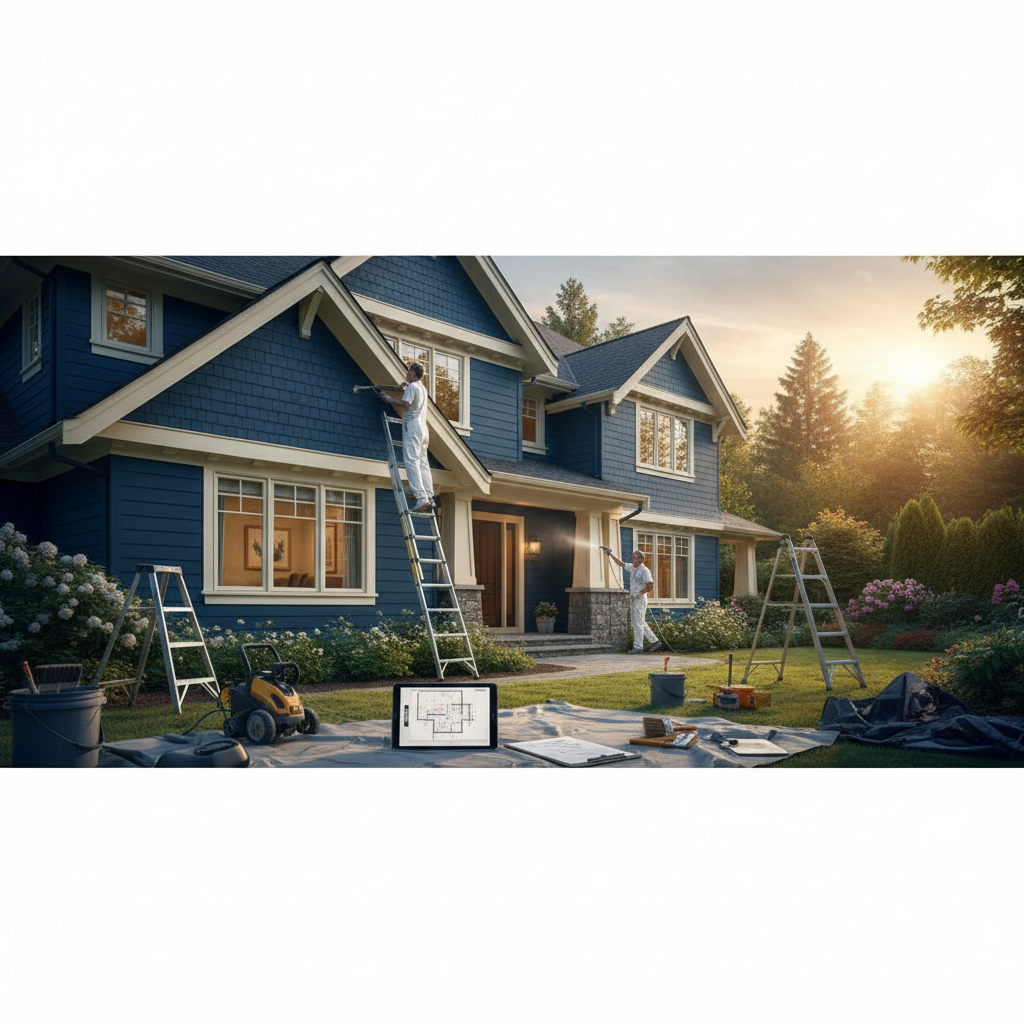
Your house’s curb‑appeal, protection against the elements, and resale value all hinge on one thing: a flawless exterior paint job. This guide walks you through every decision—from timing and prep to pricing and payment—so you can hire a professional with confidence.
Introduction
Imagine you’ve just returned from a weekend getaway to find the front of your Boston‑area home streaked with peeling paint and bubbling spots after a sudden rainstorm. You’re not alone—70 % of premature paint failures are traced to inadequate surface preparation (CertaPro, “10 Common Exterior Paint Problems”). Add to that the average homeowner loses $1,200‑$2,500 per project when low‑quality paint or missed prep steps are involved.
The root cause? An industry still dominated by phone‑tag, vague flat‑rate quotes, and pay‑per‑lead lead‑gen sites that leave you guessing about price, scope, and weather windows.
Enter PLMBR, the AI‑native home services workflow and payments platform that replaces that broken chain with a single, transparent, escrow‑backed booking packet. In the sections that follow, you’ll learn exactly what you need to know about exterior painting, how to vet providers, and why PLMBR’s structured workflow eliminates the hidden costs that have plagued homeowners for decades.
What Homeowners Need To Know About Exterior Painting
1. The Core Components of a Quality Job
- Surface preparation – power‑washing, scraping, sanding, and priming. Skipping any of these steps is the #1 reason paint peels within months.
- Paint selection – low‑VOC, UV‑resistant, and climate‑appropriate coatings extend lifespan to 5‑10 years (4‑6 years in harsh New England weather).
- Application technique – professional sprayers or rollers, two coats, and proper overlap.
- Weather considerations – ideal temperature 50‑90 °F, humidity < 85 %, and a rain‑free window of 24‑48 hours.
Pro‑Tip: Ask any contractor to write out a prep checklist in the quote. If it’s missing, you’re likely looking at future problems.
2. Seasonal Timing
- Best months in the Northeast: Late May through early October.
- Avoid: Early spring (high humidity) and late fall (temperature drops below 50 °F).
3. Eco‑Friendly Paint Is No Longer a Niche
According to the Home Improvement Research Institute, 80 % of consumers are willing to pay more for low‑VOC, eco‑friendly paints. When you request these options, a qualified provider will list the specific product (e.g., Sherwin‑Williams “EcoSelect”) and any certifications in the booking packet.
Cost / Risk / Hiring Reality
| Category | Typical Range | What It Covers | Common Risk if Not Detailed |
|---|---|---|---|
| Exterior painting cost | $1,000 – $4,000 per job (varies by square footage) | Labor, prep, two coats, cleanup | Hidden prep costs, low‑grade paint, mileage fees |
| Milestone billing | 30 % deposit, 40 % mid‑job, 30 % completion | Escrow‑backed release after each phase | Paying full amount upfront → risk of non‑completion |
| Weather delay buffer | 1‑2 day buffer per week of work | Rescheduling without extra charge | Rain‑related rework that eats into warranty |
| Insurance & licensing | Required by law in most states | Liability, workers‑comp, contractor license | Uncovered property damage or worker injury |
Scroll to see all columns →
Research Anchor: The U.S. painting market includes 179 k contractors (2024), yet only a fraction consistently offer transparent, line‑item pricing. (Rainer Painting)
How To Vet Providers Without Getting Burned
-
Check Licensing & Insurance
- Verify a contractor’s state license number on the appropriate licensing board (e.g., Massachusetts Construction Board).
- Ensure they carry general liability (minimum $1 M) and workers’ comp.
-
Read Reviews & Look for Trust Signals
- Look for average rating ≥ 4.5, a history of completed jobs, and photos of finished work.
- PLMBR surfaces these signals directly in the provider card, saving you endless Googling.
-
Demand a Structured Quote
- A proper booking packet lists every line item: surface prep, primer, paint brand, labor hours, travel, and cleanup.
- Compare packets side‑by‑side to spot hidden fees.
-
Confirm Weather‑Window Planning
- Ask the contractor how they schedule around temperature and humidity.
- The best pros will include a weather contingency clause in the packet.
-
Ask About Eco‑Friendly Options
- Request low‑VOC or certified “green” paints.
- Verify that the provider can supply product data sheets.
Pro‑Tip: Use PLMBR’s AI Booking Packet Builder—it forces providers to itemize prep, paint type, and weather contingencies, eliminating vague “all‑in” estimates.
Where The Old Workflow Breaks
| Broken Step | Symptoms for Homeowners | Why It Happens |
|---|---|---|
| Phone‑tag intake | You repeat the same description to 5‑10 contractors. | Manual intake forces each pro to ask the same questions. |
| Vague flat‑rate quotes | “$2,500 flat rate, no breakdown.” | Lead‑gen sites push contractors to quote quickly to win the job. |
| No escrow or milestone billing | You pay a $1,000 deposit, then the crew disappears. | Traditional contracts lack payment safeguards. |
| Dead leads / pay‑per‑lead | Contractors chase you, then vanish; you’re left with no one to call. | Pay‑per‑lead platforms incentivize volume over quality. |
| Weather‑related rework | Paint bubbles after a rainstorm a week later. | Contractors ignore optimal temperature/humidity windows. |
| Dispute escalation | Long email chains, unclear evidence, costly arbitration. | No centralized thread to attach photos, invoices, or messages. |
Scroll to see all columns →
These friction points waste time, money, and trust—the exact pain points PLMBR was built to eliminate.
How PLMBR Changes This Workflow
1. Conversational AI Intake (One‑Time)
- You describe the issue in plain English, attach photos, and the AI instantly identifies the correct trade, location, and urgency.
- Smart follow‑up questions (e.g., “Do you have a 7‑day window with temps 50‑85 °F?”) are only asked when they improve match quality.
2. Semantic Matching & Provider Vetting
- PLMBR’s vector‑based search surfaces only providers who are licensed, insured, and have high trust scores—no dead leads.
3. AI Agent Outreach (Premium)
- A personal AI agent contacts up to five vetted painters simultaneously, tracks each response, and presents you with structured booking packets side‑by‑side.
4. Booking Packet Comparison
| Feature | Traditional Quote | PLMBR Booking Packet |
|---|---|---|
| Line‑item pricing | One lump sum | Prep, primer, paint type, labor, travel, waste disposal |
| Weather contingency | Rarely mentioned | Explicit clause with temperature/humidity thresholds |
| Milestone billing | Optional | Built‑in escrow release after each phase |
| Dispute evidence | Scattered emails | Inline thread with attached photos, invoices, AI‑mediated recommendations |
Scroll to see all columns →
- You can click “Compare” and instantly see which provider offers the best prep, the most durable paint, and the fairest payment schedule.
5. Escrow‑Backed Payments & Progressive Billing
- Funds are authorized via Stripe and held in escrow until the contractor marks a milestone as complete.
- This protects you from “vanishing crew” scenarios and ensures the contractor gets paid only for work verified by you.
6. In‑Context Messaging & Dispute Resolution
- All communications, booking packets, billing requests, and dispute forms live inside a single chat thread.
- If a problem arises, the AI suggests evidence packs and recommended resolutions, dramatically shortening the resolution time.
Bottom Line: PLMBR turns a chaotic, multi‑email, multi‑phone‑call process into a single, transparent workflow that guarantees you receive exactly what you paid for—on time, on budget, and with the right paint.
Questions To Ask Before Hiring
- What specific surface‑prep steps will you perform? (e.g., power‑wash, scrape, sand, prime)
- Which paint brand and VOC rating are you using? Provide product data sheets.
- Can you outline the milestone billing schedule and escrow release criteria?
- How do you handle weather delays? Look for a clause that protects both parties.
- Do you have current liability insurance, workers’ comp, and a state contractor license? Ask for the license number and a copy of the insurance certificate.
- What warranty do you offer on workmanship and paint? A good pro will guarantee at least 5 years for labor and 10 years for the paint system.
Conclusion
Exterior painting is a high‑impact investment—one that protects your home, boosts curb appeal, and can increase resale value by up to 7 % when done correctly. Yet the market is riddled with phone‑tag, vague pricing, and risky payment structures that cost homeowners an average $1,200‑$2,500 in hidden expenses and headaches.
By leveraging AI‑driven intake, semantic provider matching, structured booking packets, and escrow‑backed progressive billing, PLMBR eliminates those pitfalls. You get:
- Transparent, line‑item quotes you can compare side‑by‑side.
- Verified, insured professionals without the pay‑per‑lead chase.
- Milestone‑based payments that keep money safe until the job is truly done.
- One‑stop messaging that captures every detail, from prep to warranty.
Ready to replace the old broken workflow with a smarter, safer way to repaint your home?
- Explore the platform: PLMBR homepage
- Find vetted exterior‑painting pros in your city: Find Exterior Painting pros on PLMBR
- Compare structured quotes instantly: Compare quotes on PLMBR
Your home deserves a paint job that lasts—let PLMBR help you get it right the first time.
References
- CertaPro Painters, “10 Common Exterior Paint Problems.”
- OakCliff Painting, “7 Important Mistakes Painters Make Before Exterior Painting.”
- Rainer Painting, “3 Signs to Hire Exterior Painting Contractors.”
- Home Improvement Research Institute, “Consumer Willingness to Pay for Low‑VOC Paint.”
- EPA, “Low‑VOC Paints and Their Benefits.” https://www.epa.gov/indoor-air-quality-iaq/volatile-organic-compounds-impact-indoor-air-quality
- Massachusetts Construction Board, Licensing Verification. https://www.mass.gov/orgs/department-of-public-safety-and-inspection
All external links point to reputable, publicly available resources; internal links are natural calls‑to‑action for readers ready to move forward.